
Every few years, technology reaches a moment where progress doesn’t just accelerate it shifts direction entirely. As we approach 2026, those shifts are becoming clearer. Businesses are no longer asking whether they should digitize. The new question is how fast they can evolve and how much intelligence they can build into their systems.

From automation and predictive intelligence to the rapid advancement of mobile experiences and product engineering, 2026 is gearing up to redefine the foundations of digital business. Companies looking to scale will lean heavily on partners who can bring specialized skills whether that means working with a Machine Learning Development Company, engaging a seasoned Dot Net Development Company, or choosing to Hire Dedicated Dot Net Developers to strengthen their internal capabilities.

Here is a closer look at the trends that will shape the technology landscape in 2026.

1: Automation Becomes a Strategic Priority

Automation has already earned its place in business operations, but in 2026 we will see a significant shift from isolated automations to fully interconnected ecosystems. Instead of automating a single workflow, companies will look at automation as a complete operational strategy.

The new generation of automation platforms will analyze patterns, understand workloads, and recommend improvements. Business Process Automation will also evolve into a tool that supports long-term planning rather than short-term efficiency.

Many companies will rely on automation for:

  • Reducing delays across multi-department workflows
  • Improving compliance in regulated processes
  • Removing human error from routine data operations

The result will be organizations that operate with speed and clarity, even during unpredictable market conditions.

2) AI and Machine Learning Take the Lead

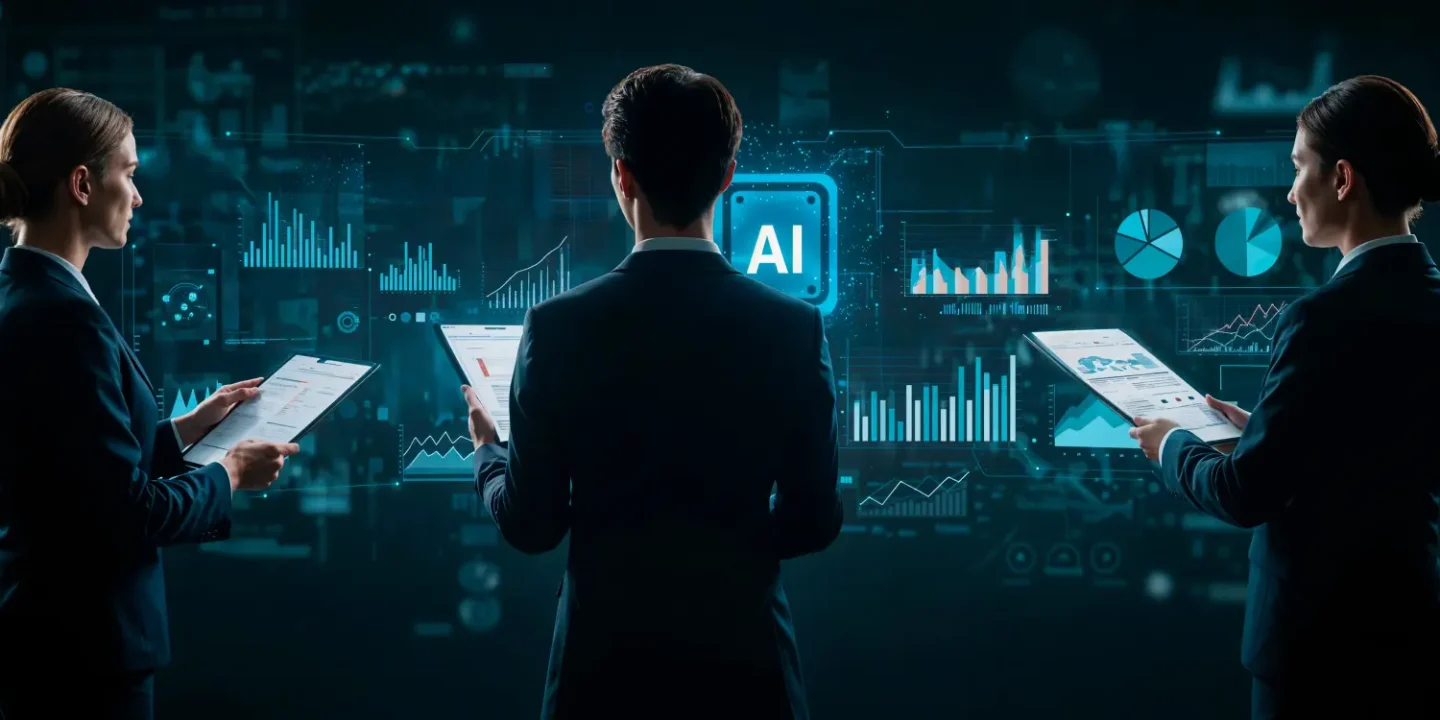
By 2026, AI will no longer feel like a futuristic concept. It will be part of everyday decision-making across all industries. Everything from marketing forecasting to product behavior analysis will be driven by machine learning models.

Businesses that once experimented with AI pilots will now embed it into their core architecture. Working with a trusted Machine Learning Development Company will become essential to build custom models that cannot be achieved through off-the-shelf solutions.

AI systems will interpret signals in real time, recognize hidden relationships in data, and offer actionable recommendations. This shift gives leaders the ability to make decisions based on predictive confidence rather than guesswork.

3) A New Era for Analytics & Business Intelligence

Analytics in 2026 will be more conversational, more context-aware, and far more integrated into daily operations than traditional BI tools. Instead of searching for answers inside dashboards, leaders will receive insights proactively through intelligent business assistants.

These assistants will highlight anomalies, summarize performance, and suggest improvements automatically.

The focus will move from “collecting data” to “understanding data in motion.”

As a result, Business Intelligence teams will transition from reporting roles to strategic advisory functions, guiding product evolution, customer experience improvements, and long-term planning.

4) Growing Demand for Dedicated Developers Teams

With technology evolving at an unprecedented pace, companies are finding it increasingly challenging to maintain strong internal engineering bandwidth. This reality is fueling the global rise of dedicated development models.

Working with specialized teams allows businesses to scale faster, innovate more consistently, and maintain technical depth. Many organizations prefer to Hire Dedicated Developers because it gives them reliable capacity without the overhead of constant recruitment.

Dedicated engineering teams will become especially valuable for:

  • Building and maintaining complex platforms
  • long-term product engineering
  • Cloud-native modernization
  • Rapid innovation cycles in competitive markets

2026 will reward businesses that invest early in strong engineering partnerships.

5) Modern .NET Development Gains Significant Traction

The .NET ecosystem is entering one of its strongest periods of adoption. With the release of .NET 9 and ongoing investments in performance, cross-platform compatibility, and cloud-native tooling, the framework is becoming a top choice for enterprise product development.

Companies planning modernization initiatives will increasingly collaborate with a Dot Net Development Company to redesign legacy systems, improve scalability, and enable better integrations.

The rising demand to Hire Dedicated Dot Net Developers reflects how important .NET has become for building robust product foundations. From microservices architectures to next-generation enterprise applications, .NET will continue powering mission-critical systems across industries.

6) Mobile App Development Transforms Into Intelligence First Experiences

Mobile apps will evolve beyond interfaces into intelligent digital companions. As on-device AI becomes more powerful, apps will personalize content, trigger contextual actions, and adapt their interfaces based on user behavior.

This shift will introduce a new generation of mobile experiences where devices understand needs and intentions before users even express them. Developers will design apps that anticipate behaviors, simplify tasks, and interact seamlessly across multiple devices.

Some of the most notable 2026 mobile trends include:

  • AI-native app experiences
  • Multi-device user journeys (phones, AR, wearables, cars)
  • Faster prototyping supported by GenAI
  • Edge processing for near-instant responses

For businesses, mobile app development will continue to be one of the strongest platforms for user engagement and long-term retention.

7) Product Engineering Evolves Into a Continuous Lifecycle

Product engineering in 2026 will no longer follow a traditional linear roadmap. Instead, products will evolve continuously through data, analytics, and user-driven improvements. GenAI will streamline early planning stages, helping teams explore concepts, validate assumptions, and create functional prototypes within hours rather than weeks.

Engineering teams will focus more on:

  • Modularity and scalable architecture
  • Cloud-native patterns that improve reliability
  • Rapid adaptation to new market opportunities
  • Performance optimization and sustainability

This approach allows businesses to maintain competitive velocity while reducing the risk of large-scale product redesigns.

8) Cybersecurity Will Shift Toward Identity and Context

Security threats are growing more sophisticated, pushing organizations to rethink their defense strategies. In 2026, security will not just protect systems — it will predict vulnerabilities before they occur.

Zero-trust architecture will become the standard foundation. Everything from user access to API calls will require verification. Identity and context will determine authorization, reducing the chances of internal or external breaches.

AI-driven security intelligence will help teams identify unusual patterns and respond immediately, making cyber resilience a core business capability rather than an IT responsibility.

9) Sustainability & Green Tech

Environmental responsibility will be integrated into both infrastructure and development practices. Eco-friendly data centers, serverless computing, and energy-efficient coding will form the foundation of sustainable digital operations.

Companies will adopt greener engineering practices by monitoring carbon usage and optimizing processes. Teams will refactor outdated systems to use fewer resources while still delivering better performance.

Sustainability won’t be a marketing checkbox it will be a competitive advantage and a brand expectation.

What This Means for Businesses in 2026?

For businesses, 2026 represents a turning point where digital strategy will no longer be optional — it will be the primary driver of competitiveness. The rise of automation, predictive intelligence, and intelligent mobile experiences means companies must operate faster, make smarter decisions, and deliver seamless digital interactions across every touchpoint. 

Organizations that integrate AI, streamline operations through Business Process Automation, and strengthen their engineering capabilities will be able to innovate continuously rather than react passively. This shift gives businesses the opportunity to build more resilient systems, reduce operational friction, and respond instantly to market changes.

At the same time, the demand for specialized expertise will grow significantly. Companies that choose to Hire Dedicated Developers, work with a skilled Machine Learning Development Company, or collaborate with a modern Dot Net Development Company will be far better equipped to navigate complex technological landscapes. 

The future belongs to businesses that invest early, modernize their digital infrastructure, and embrace product engineering as an ongoing lifecycle instead of a one-time project. In 2026, success will come to those who combine strong technology partnerships with a forward-looking mindset, enabling them to grow faster, deliver better experiences, and stay ahead in a rapidly transforming digital economy.

Conclusion

The year 2026 promises a technological landscape that is smarter, more automated, deeply interconnected, and centered around meaningful digital experiences. Businesses preparing for this shift will turn to trusted partners — whether to Hire Dedicated Developers, engage a Dot Net Development Company, or collaborate with a Machine Learning Development Company to build intelligent solutions.

Innovation is becoming a constant. And the companies that embrace it fully will be the ones that lead the next decade of digital transformation.

Want to reach us now?

Want to share more? Please send us an email to

Looking for a job? Send your resume to

Want to reach us now?

Want to share more? Please send us an email to

Looking for a job? Send your resume to

Please fill out the form below to help us better understand your software development needs.