Build AI That Can Use the Knowledge Your Business Trusts

Connect large language models with enterprise documents, databases and business knowledge through retrieval architectures designed for relevant, grounded responses.
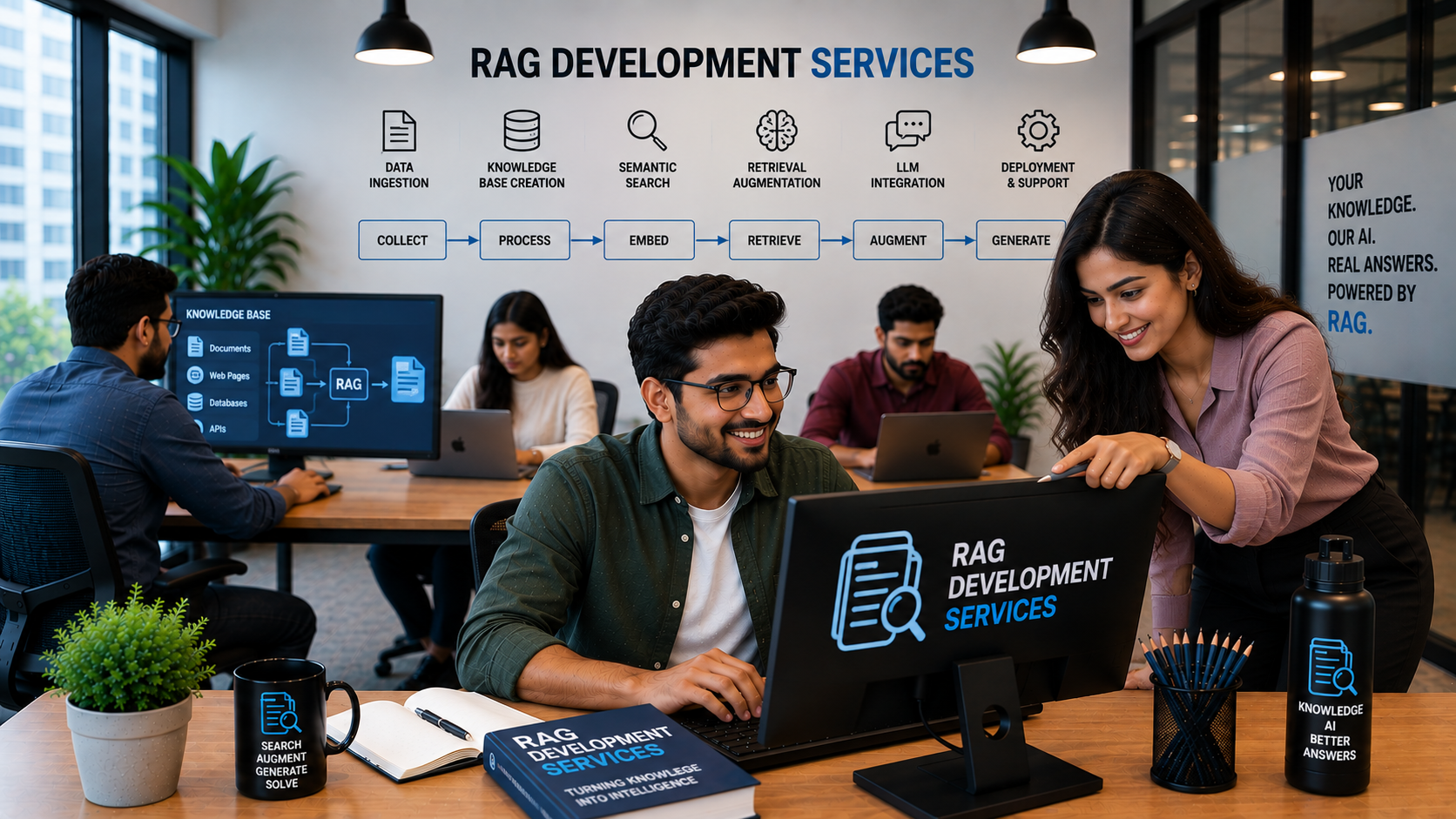
Connect Generative AI With the Knowledge Your Business Already Has
Build retrieval around the quality, access and context of your actual enterprise information.
A useful RAG system depends on more than connecting an LLM to a vector index. We engineer the knowledge pipeline from ingestion and metadata through retrieval, permissions, source attribution and evaluation so the application can use enterprise information in a controlled and traceable way.
Three benefits.
Grounded in Business Knowledge
Built for Retrieval Quality
Designed for Enterprise Access
RAG Applications for Enterprise Knowledge
Enterprise Knowledge Assistants
Answer questions across approved internal knowledge.
AI Knowledge Bases
Create searchable, conversational access to business information.
RAG-Powered Product Features
Embed grounded AI inside SaaS and enterprise applications.
Document Intelligence & Q&A
Retrieve and answer across document collections.
Customer & Support Knowledge
Use approved product and support information in AI experiences.
Multi-Source Enterprise RAG
Retrieve across documents, databases and APIs.






Enterprise RAG & AI Knowledge Bases
Turn enterprise information into a retrievable, permission-aware knowledge layer.
Enterprise knowledge is often distributed across documents, databases, APIs and business systems. A strong RAG architecture brings those sources into a retrieval layer that preserves context and access boundaries while giving the application relevant evidence at answer time.
Multi-Source Ingestion
Metadata
Hybrid Retrieval
Access-Aware Search
Source Attribution
Evaluation
RAG Platform Capabilities
Capability
Data Ingestion
Supporting copy
Connect approved knowledge sources
Capability
Document Parsing
Supporting copy
Extract usable content
Capability
Chunking & Enrichment
Supporting copy
Prepare context with metadata
Capability
Embeddings
Supporting copy
Represent content for semantic retrieval
Capability
Vector Search
Supporting copy
Retrieve by semantic similarity
Capability
Hybrid Search
Supporting copy
Combine semantic and lexical retrieval
Capability
Metadata Filtering
Supporting copy
Narrow results by business context
Capability
Reranking
Supporting copy
Improve ordering of candidate context
Capability
Access-Aware Retrieval
Supporting copy
Respect user and tenant permissions
Capability
Source Attribution
Supporting copy
Return traceable evidence
Capability
RAG Evaluation
Supporting copy
Measure retrieval and generation
Capability
Observability
Supporting copy
Trace retrieval and model behavior
How We Build RAG Systems
Discover
Define questions, users, knowledge sources, permissions and success criteria.
Prepare Knowledge
Parse, clean, chunk, enrich and version enterprise information.
Design Retrieval
Choose vector, keyword, metadata, hybrid and reranking patterns.
Build & Integrate
Connect retrieval with LLMs, application UX and business systems.
Evaluate
Measure retrieval relevance, groundedness, source correctness and failure cases.
Deploy & Improve
Monitor production behavior, refresh content and expand evaluations.
Power Your Product with Enterprise Knowledge
RAG Technology Stack
5.0 REVIEWS
RAG architecture spans data processing, search, model integration, backend services and production observability. We choose each component according to the source data, retrieval requirements, security boundaries and the application experience being built.
Models
Frameworks
Vector / Search
Backend
Data
Cloud & Ops
Ground AI in the Knowledge Your Business Trusts
Documents
Policies, manuals, contracts, reports and knowledge articles.
Databases
Retrieve governed structured business context.
APIs
Access current information from approved systems.
Hybrid Search
Combine semantic and lexical relevance.
Permissions
Apply role, tenant and source-level access.
Evaluation
Measure whether retrieved evidence supports the response.
Connect With the Systems Your Business Already Uses
Documents
SharePoint-style repositories | object storage | file systems
Databases
PostgreSQL | SQL Server | MySQL | MongoDB
Search
Elasticsearch/OpenSearch | vector indexes
Enterprise Apps
CRM | ERP | support systems
APIs
Internal REST APIs | third-party services
Identity
SSO | roles | tenant/user access context
Engagement Model
Keep Retrieval Aligned With Enterprise Access Boundaries
Secure RAG requires controls across ingestion, indexing and runtime retrieval.
Source Permissions
Respect ownership and approved access.
Access-Aware Retrieval
Filter context by user/tenant.
Data Protection
Secure stored and transmitted information.
Source Traceability
Keep links to authoritative content.
Secrets & Credentials
Protect connectors and service access.
Auditability
Trace retrieval and important configuration changes.
RAG security must extend beyond the original storage location into parsed content, indexes and runtime retrieval. We design identity and permission context into the retrieval path so users receive only information they are authorized to access.
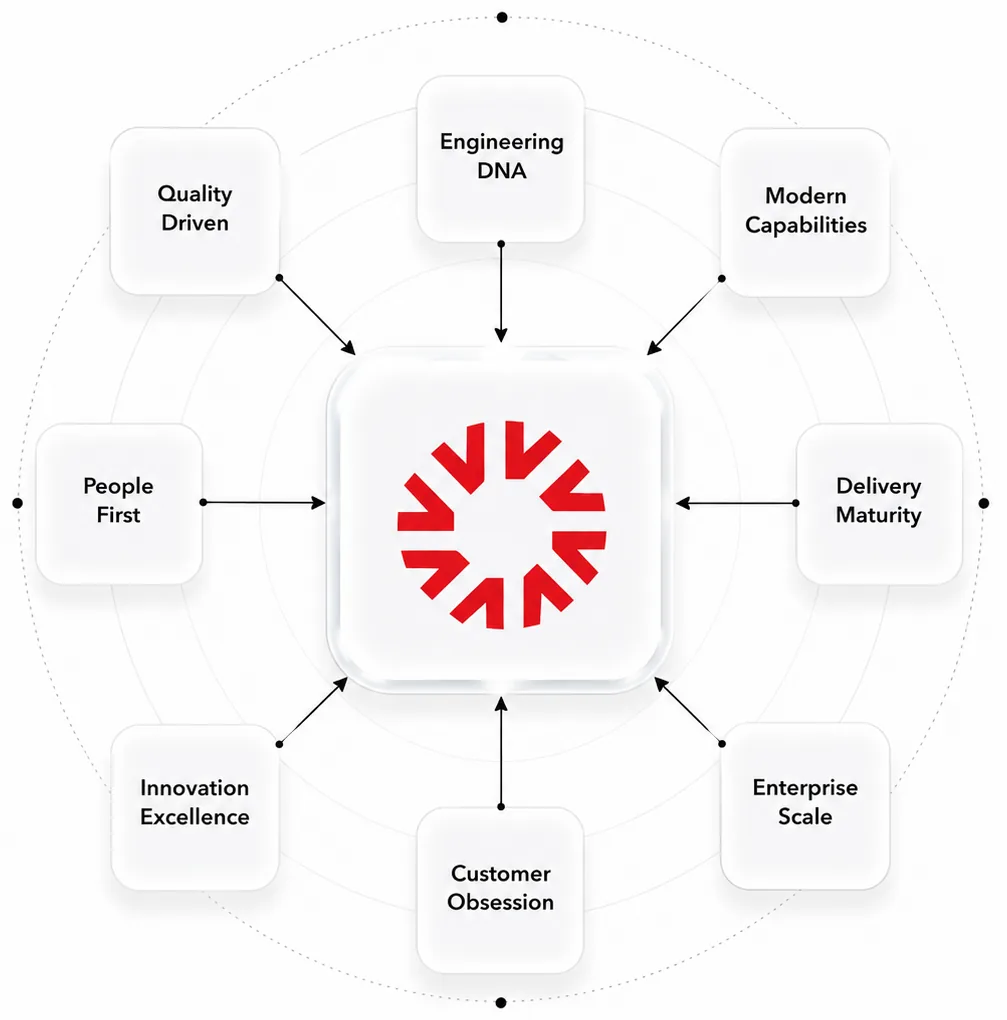
Why Choose Virtual Coders for RAG Development?

"Game-Changing Custom SaaS Solutions – Highly Recommended! Working with Virtual Coders to develop our custom SaaS platform was transformative. Their team grasped our unique needs and delivered a robust solution, greatly enhancing our operations. Their attention to detail and proactive communication made the process smooth and enjoyable. Highly recommended for Australian companies seeking to enhance their software solutions!"

Rick Giesel
Owner, ICT
Why Choose Virtual Coders for RAG?
✓Structured and unstructured data integration.
✓Retrieval architecture beyond vector similarity alone.
✓Full-stack product and API integration.
✓Permission-aware enterprise design.
✓Evaluation and observability for continuous improvement.
Frequently Asked Questions



Need AI to Work With Your Enterprise Knowledge?
Retrieval-Augmented Generation connects an LLM with external information retrieved at runtime so responses can use enterprise or domain-specific context.
RAG is useful when AI needs private, current or domain-specific information that should not rely only on a model's general training.
Not always. Enterprise retrieval may combine vector search with keyword search, metadata filtering, structured queries and APIs.
Yes, when architecture and permissions are designed around the organization's data requirements and approved provider configuration.
We improve retrieval, context quality, prompts, source attribution and evaluation. No architecture can guarantee that an LLM will never produce an incorrect statement.
Retrieval and generation should be evaluated separately using relevance, groundedness, source correctness, completeness and application-specific criteria.
Yes. A RAG system can retrieve across documents, databases, APIs and search systems when those sources can be integrated and governed appropriately.
Yes. Retrieval can be integrated into an existing SaaS, enterprise application, copilot, agent or support workflow.
SEND US A MESSAGE.

READY TO ACCELERATE YOUR TECH JOURNEY?
Partner with our expert engineers to transform your ideas into scalable, high-performance solutions tailored to your business needs.

OUR OFFICES
India
E-414 to 416, Ganesh Glory 11, Jagatpur Road, Nr. BSNL Office, off. S.G. Highway, Jagatpur, Ahmedabad, Gujarat - 382470
Australia
18, Giancarlo Crescent, Doolandella-4077, QLD, Australia
Canada
20 Meadowglen Pl, Toronto, ON M1H 2Y5